McKinley
Station ElevenMcKinley is a settlement that grows from an abandoned roadside motel into a community of twenty-seven families. Founded by people stranded by the Georgia Flu, it becomes the home where Jeevan Chaudhary settles, marries Daria, and serves as the nearest thing to a doctor for a wide surrounding area. Its scenes make the post-collapse world more than a landscape of loss: McKinley offers safety and continuity, while its school and medical needs show the difficult questions and practical burdens that continuity brings.
Founding and Setting
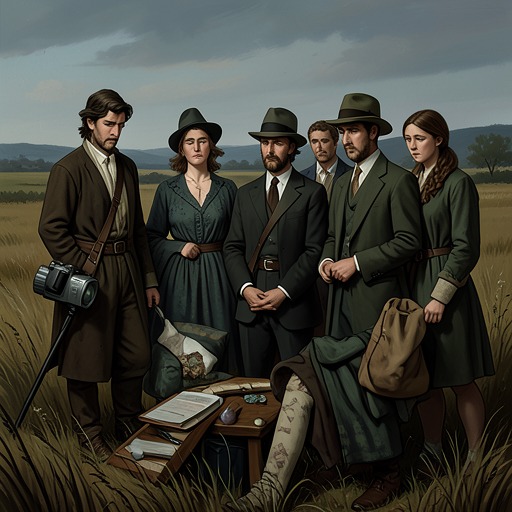
McKinley began with eight members of a sales team from McKinley Stevenson Davies, stranded at an isolated corporate retreat when the Georgia Flu swept across the continent. A few days after leaving the retreat, they found an abandoned motel on a disused road far from major highways. In the frightening early years, they stayed close together for safety; later, the habit of living there helped turn the motel into a lasting settlement. The community took its name from its founders’ company.
By Year Fifteen, twenty-seven families lived at McKinley, across the road from a river. The settlement is described as peaceful, and the former motel remains central to its communal life: its largest room serves as a school, while another room functions as Jeevan’s surgery. The site’s reused rooms support both ordinary routines and the care required when help is scarce.
Jeevan’s Home and Work
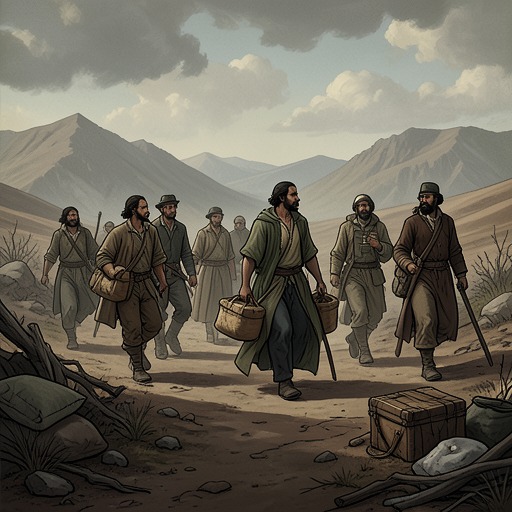
Jeevan reached McKinley in Year Three after walking a thousand miles. He married Daria, one of the settlement’s founders and a former sales assistant, in the summer of Year Ten. By Year Fifteen, he shares life there with Daria and their friend Michael, a former truck driver. The riverbank is a place for their company and conversation, marking a substantial change from the isolation and uncertainty of Jeevan’s earlier flight.
Jeevan has become the closest thing to a doctor within a hundred-mile radius. One day, after a neighbor falls from a ladder and breaks an arm, Jeevan sets the bone. The work is difficult in an era without anesthesia, and the patient’s pain leaves Jeevan shaken. Yet he values being someone others can turn to in a crisis. His medical role is not presented as formal authority; it is a responsibility created by distance from other help and sustained by the community’s needs.
School, Memory, and the Past
McKinley has a school where ten children meet daily in the largest motel room. Its lessons bring the pre-collapse world into the present, but knowledge of that world is not uncomplicated. After an eleven-year-old pupil learns that people once commonly lived beyond sixty, she comes home crying, frightened by the difference between past and present life expectancy. Michael wonders whether children should continue to be taught such things, and Daria considers whether knowing the past makes them happier or less happy.
The exchange gives McKinley a tension beyond the practical work of survival: the settlement must decide what to pass on about a vanished world, even when that history can cause children grief. The question is left open. The school preserves knowledge, but the scene makes clear that memory can both inform the next generation and sharpen its sense of loss.
A Place of Care
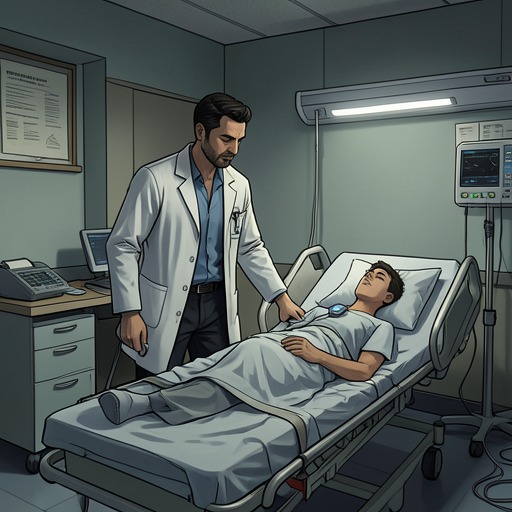
That same evening, a man arrives at the motel on horseback with his wife slumped over the saddle, saying that she has been shot. Jeevan understands from the man’s manner that he loves her. The group carries her into the room used as Jeevan’s surgery; Michael lights the oil lamps, and the man asks whether Jeevan is the doctor. The scene establishes the settlement as a refuge to which people may bring urgent needs, while stopping short of resolving the woman’s condition in this passage.
McKinley’s significance lies in this combination of settlement and ongoing vulnerability. Its families have built a peaceful home out of a stranded sales team’s motel, and Jeevan has found a place where his capacity to help matters. Yet the school’s difficult lesson and the arrival of an injured stranger show that neither settled life nor the preservation of knowledge removes the consequences of the collapse.